NarraVexa Blog
Hoi An Ancient Town: a river port that kept its old houses
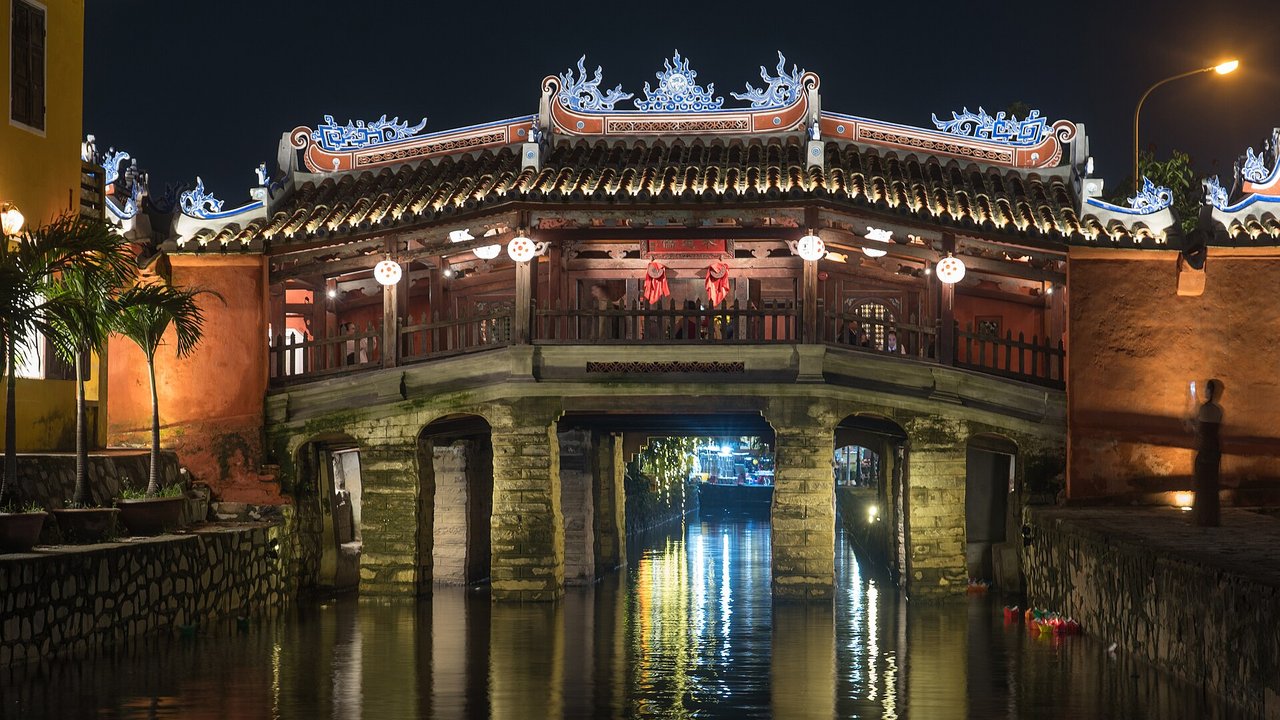
Photo: 2024-12-20 Japanese Bridge in Hoi An by Alexey Komarov, license CC BY 4.0, cropped
A house in Hoi An Ancient Town has two faces. The front opens onto the street, where customers walked in to buy. The back faces the river, where boats pulled up close to load and unload goods. UNESCO describes this layout when it tells the story of a small trading port in central Vietnam that lived off the Thu Bon River from the 15th to the 19th century.
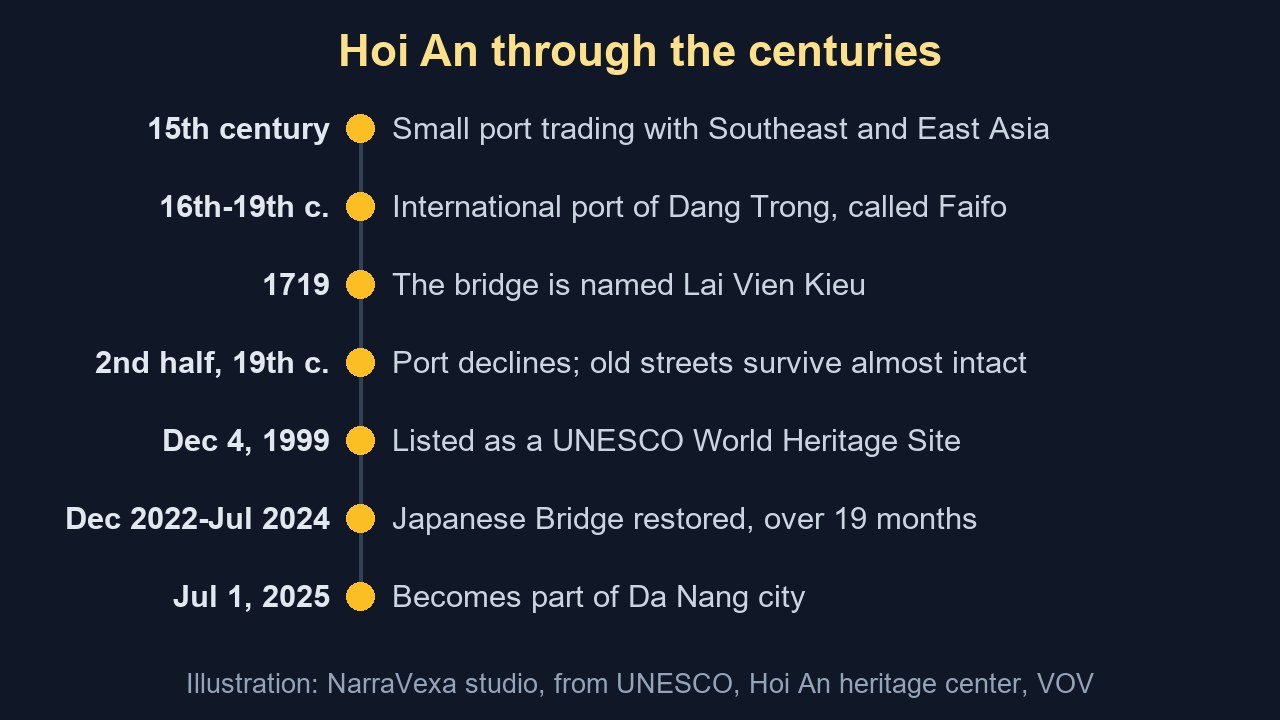
The town became a UNESCO World Heritage Site on December 4, 1999, at a committee session in Marrakesh, according to the Hoi An Center for Cultural Heritage Management and Conservation. The listed area covers only 30 hectares (about 74 acres), yet UNESCO counted 1,107 timber-frame buildings inside it: merchants' shophouses, homes, a market, a ferry landing, pagodas and family worship halls. Since July 1, 2025, the old quarter has been part of Hoi An ward in the city of Da Nang, Vietnam's state broadcaster VOV reported.
Faifo and the merchants who came by sea
From the late 16th to the mid-19th century, Hoi An was the international port of Dang Trong, the "Inner Realm" ruled by the Nguyen lords in the south of the country. Foreign traders called it Faifo, Haiso or Faisfo, and the town's conservation center still records all three names. UNESCO writes that local culture here blended with the cultures of the traders, mostly Chinese and Japanese, and later Europeans.
The Chinese in Hoi An belonged to five communities, grouped by home region. A study on the center's website says they built four assembly halls of their own and one shared hall, among them the Phuc Kien (Fujian), Trieu Chau (Chaozhou) and Quang Trieu halls. An assembly hall was where people from the same province met to talk business, and it was also a place of worship.
The Japanese Bridge and the words "it is said"
Locals call it Chua Cau, the "Bridge Pagoda". In English it is usually the Japanese Covered Bridge. The center's page on the bridge describes its roof of interlocking yin-yang tiles, a shrine inside to the guardian deity Bac De Tran Vo, and statues of dogs and monkeys at the two ends. In 1719, Lord Nguyen Phuc Chu named it Lai Vien Kieu, which English Wikipedia's article on the bridge translates as "a bridge to welcome guests from afar".
Who built it, and when, is still an open question. A stone stele from 1817 says only that the Japanese built the bridge, "it is said". The center dates it to the early 17th century, while UNESCO's English page calls it an 18th-century bridge.
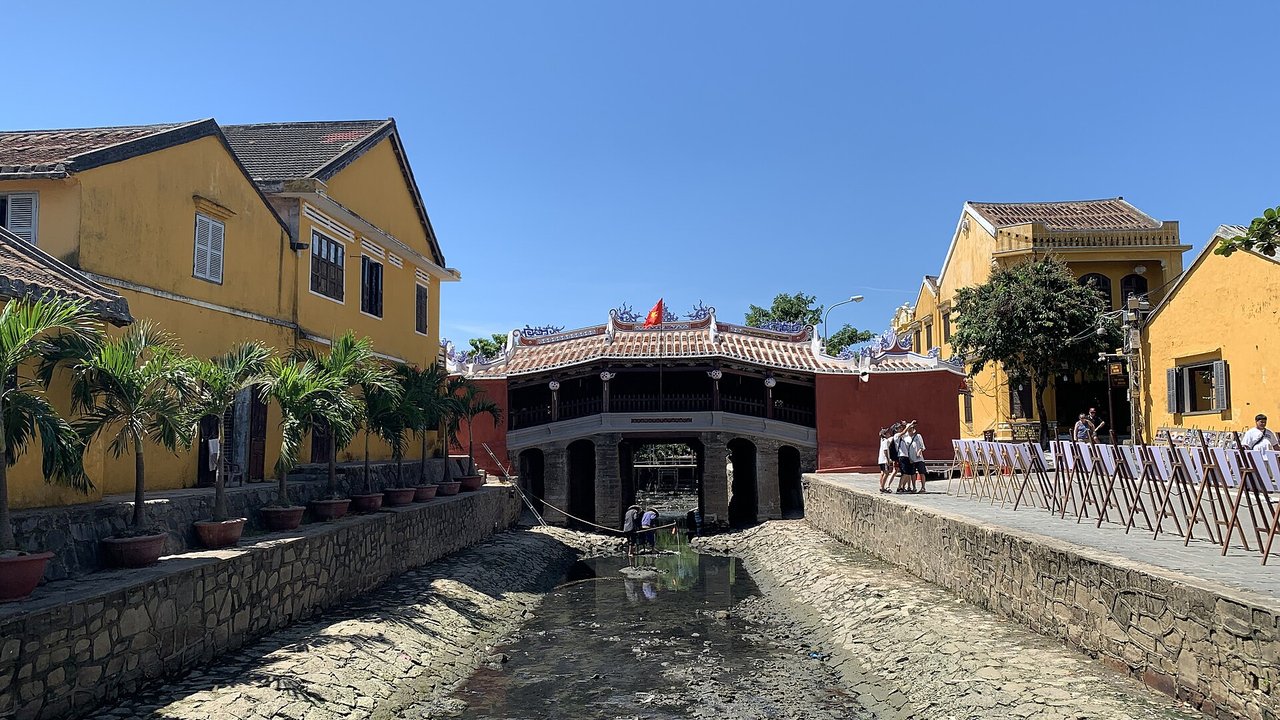
The bridge standing today has been repaired many times through the 18th and 19th centuries. The latest restoration, according to the center's restoration report, began on December 28, 2022 and finished at the end of July 2024, after more than 19 months of work.
Why the old streets survived
UNESCO notes that the port of Hoi An declined in the second half of the 19th century, and that this decline is the reason the town kept its old fabric. The Vietnamese newspaper Phap Luat Viet Nam gives a few causes: silt built up at the Cua Dai river mouth, the river changed course, and the port of Da Nang slowly took over Hoi An's trade.
The Tan Ky house at 101 Nguyen Thai Hoc Street is one of the old houses still standing. According to the center, it is a two-story house built in the 19th century, and "Tan Ky" was the name of the owner's trading firm.
Flood lines on the wooden walls
UNESCO lists the yearly floods among the threats to the old town. Inside the Quan Thang house on Tran Phu Street, the news site VnExpress reported, the flood levels of 1964, 1999, 2007 and 2009 are marked on the wooden walls, and 1964 is the highest.
After the flood at the end of October 2025, a new water line appeared on a wall of the Tan Ky house about 2.5 meters (8 feet) above the floor. That is roughly 0.6 meters (2 feet) higher than the 1999 flood. The same report says the owners had to haul their furniture up to the upper floor with a pulley.
Lantern nights on the 14th lunar day
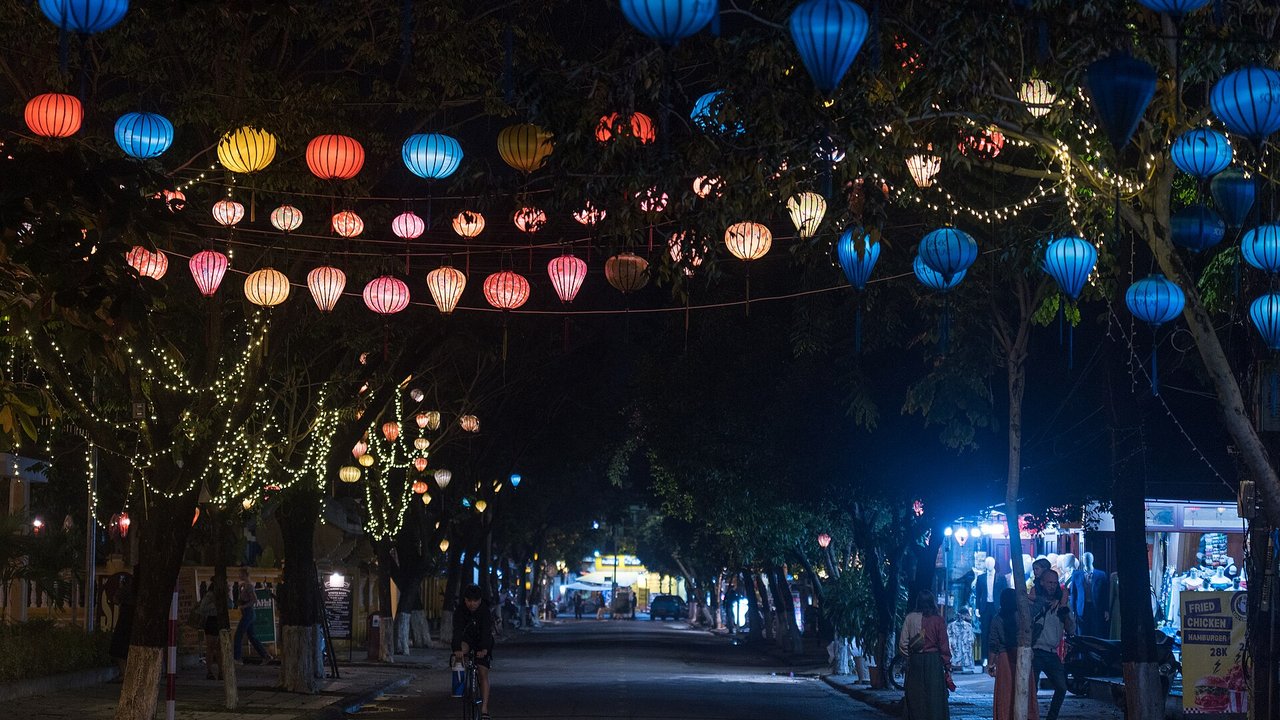
On the 14th day of every lunar month, the old town holds Dem pho co, "Old Town Night". English-language guides, Vietnam Airlines' among them, call it the Hoi An Lantern Festival. Da Nang's official tourism website wrote in 2025 that on that evening the electric lights give way to candles and lanterns, and the streets grow quiet.
Most of the program comes from the people who live there: family music groups, poetry recitals, chess, traditional martial arts, tuong and bai choi. Wikipedia's entry on tuong says it is often called classical Vietnamese opera. UNESCO describes bai choi, a central Vietnamese tradition on its intangible heritage list, as an art that combines music, poetry, acting, painting and literature.
The newspaper Tuoi Tre described in 2013 how every streetlight in the quarter went dark and only the lanterns stayed lit. On the 14th night of the first lunar month in 2022, the event returned after a pause during the pandemic, with folk songs, bai choi, calligraphy and flower lanterns floated on the Hoai River (Quang Nam newspaper, republished on the center's website).
Planning a visit: which month, which night, how to get there
Vietnam Airlines recommends February to April, when temperatures sit around 25°C (77°F) and it rains only two or three days a month. From May to July it gets hotter, 30-35°C (86-95°F), and more humid. Late October to mid-December brings the highest flood risk, with water anywhere from knee-deep to more than 2 meters (6.5 feet).
To catch a lantern night, you have to follow the lunar calendar, which still sets Vietnam's traditional holidays. Each lunar month begins on the day of the new moon, so the 14th falls one to three days before the full moon in 2027, going by timeanddate's moon tables for Hanoi. The studio converted the 13 lantern nights from December 2026 through 2027 into regular calendar dates, added the day of the week and colored them by season.
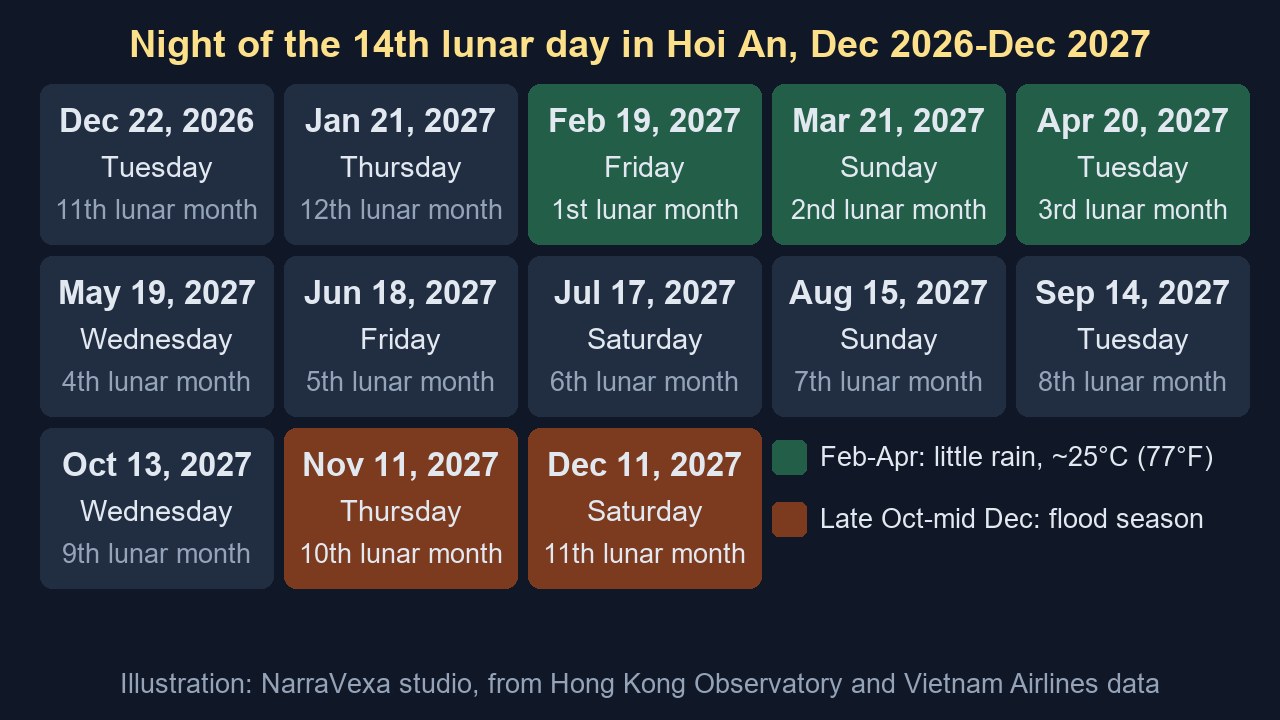
The dates come from the Hong Kong Observatory's lunar-to-solar conversion tables. A new moon close to midnight could push a month's start by one day, so the studio checked every new moon in Hanoi time on timeanddate and found no month that moved. The closest call is the new moon at 12:41 a.m. on September 1, 2027, Vietnam time (UTC+7). The table puts Tet, the Lunar New Year, on February 6, 2027, which matches the 2027 Tet holiday schedule posted on the official portal of Ha Tinh province.
If the town keeps the monthly schedule it has followed in recent years, the three green nights are February 19, March 21 and April 20, 2027, and March 21 is a Sunday. The two orange nights, November 11 and December 11, 2027, fall in the middle of flood season. Either way, check the weather forecast and the town's announcements before you book. The next lantern night is Tuesday, December 22, 2026, the same day as the winter solstice, which arrives at 3:50 a.m. Vietnam time (UTC+7).
The old town is about 30 km (19 miles) from central Da Nang. Vietnam Airlines puts the trip at about 40-55 minutes by taxi or ride-hailing app and 45-60 minutes if you drive a car or motorbike yourself. Bus No. 01 runs from central Da Nang to Hoi An bus station in 60-80 minutes. The airline's page shows no update date; the studio read it on November 21, 2026.
On the evening of the 14th lunar day, the electric lights in the old town give way to lanterns, and on a wooden wall of the Tan Ky house, the 2.5-meter line from the 2025 flood is still there. Is there a mark like that where you live, a line on a wall or a date on a door frame, left by the worst flood anyone remembers?